Downtown Karst Valley
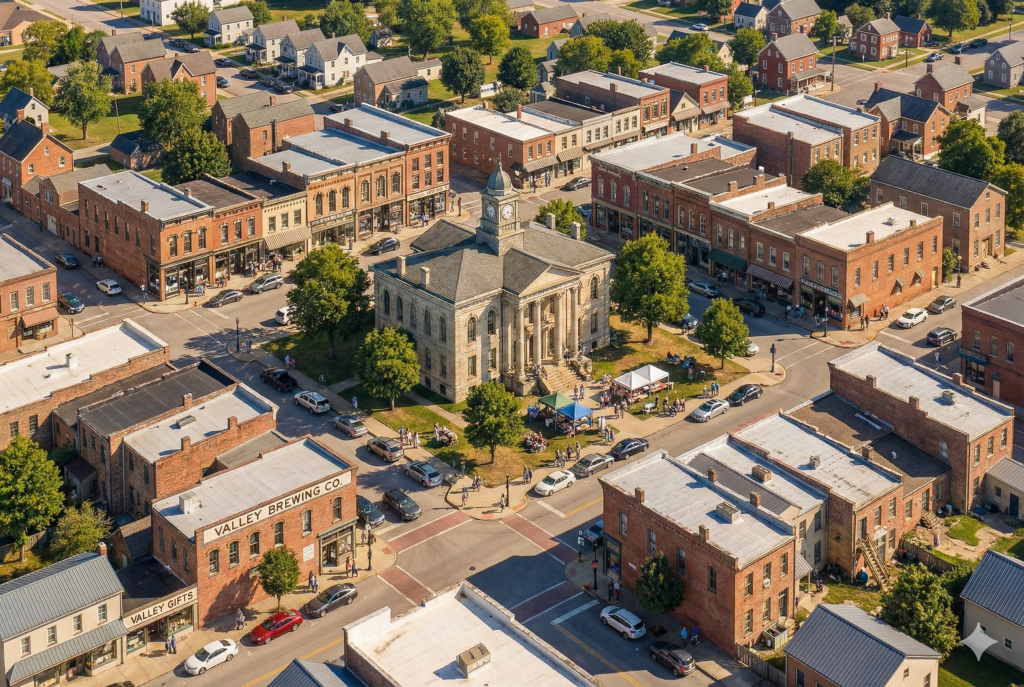
Downtown Karst Valley sits at the center of town, anchored by the historic courthouse that has watched generations pass through its doors. The square is framed by brick storefronts, narrow side streets, and buildings that have been repurposed rather than replaced. Nothing feels hurried. Nothing feels temporary.
Breweries and restaurants fill many of the ground level spaces, drawing steady crowds in the evenings and on weekends. Local establishments sit alongside a handful of regional chains, creating a balance between familiarity and independence. Boutique shops line the surrounding blocks, offering clothing, books, gifts, and specialty goods that cater as much to locals as to visitors passing through.
On most days, downtown feels active without being crowded. Foot traffic ebbs and flows with lunch hours, court schedules, and seasonal events. Conversations spill out onto sidewalks. Music drifts from open doors. The courthouse lawn serves as a natural gathering place, hosting markets, festivals, and informal meetings that rarely make the calendar but always draw a crowd.
Downtown Karst Valley is not flashy, and it is not trying to be. It exists as a functional center of commerce, government, and social life. It is where people meet, linger, and return to again and again, often without thinking much about why.
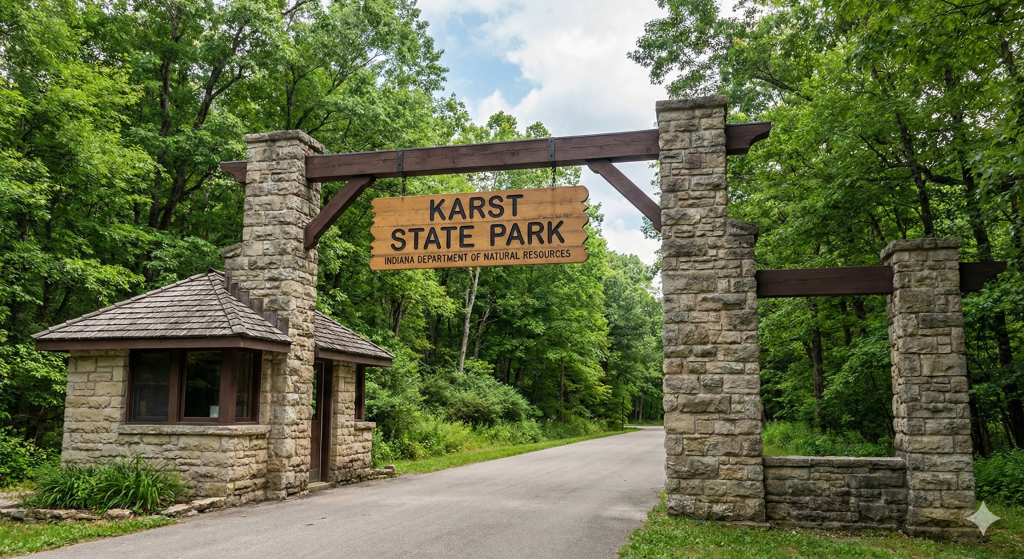
Karst State Park
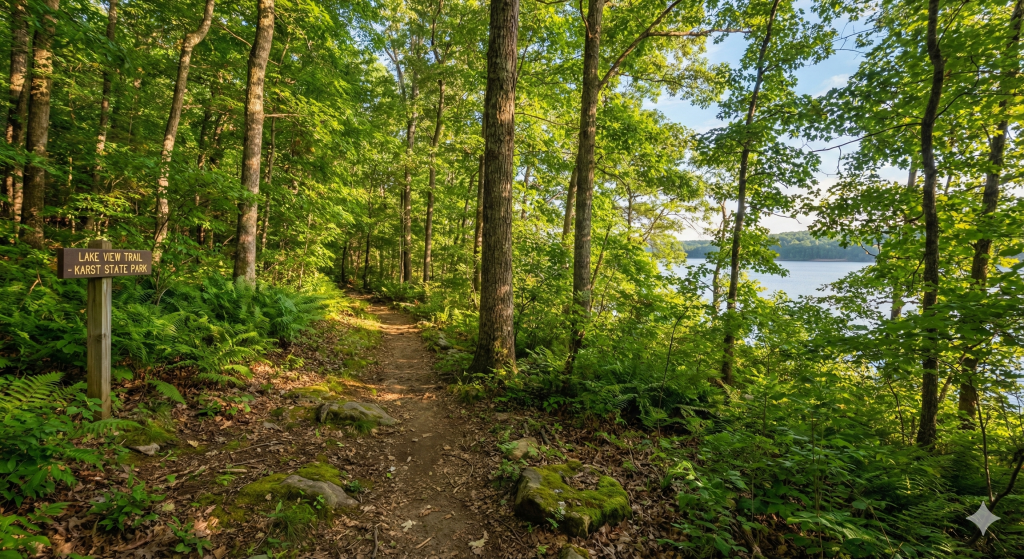
Karst State Park spans more than three thousand acres of rolling hills, wooded valleys, and exposed karst terrain. Limestone outcroppings rise and fall beneath dense hardwood canopies, cut through by sinkholes, dry creek beds, and narrow ravines shaped over centuries. Trails wind through uneven ground where elevation changes quickly and sightlines shift without warning.
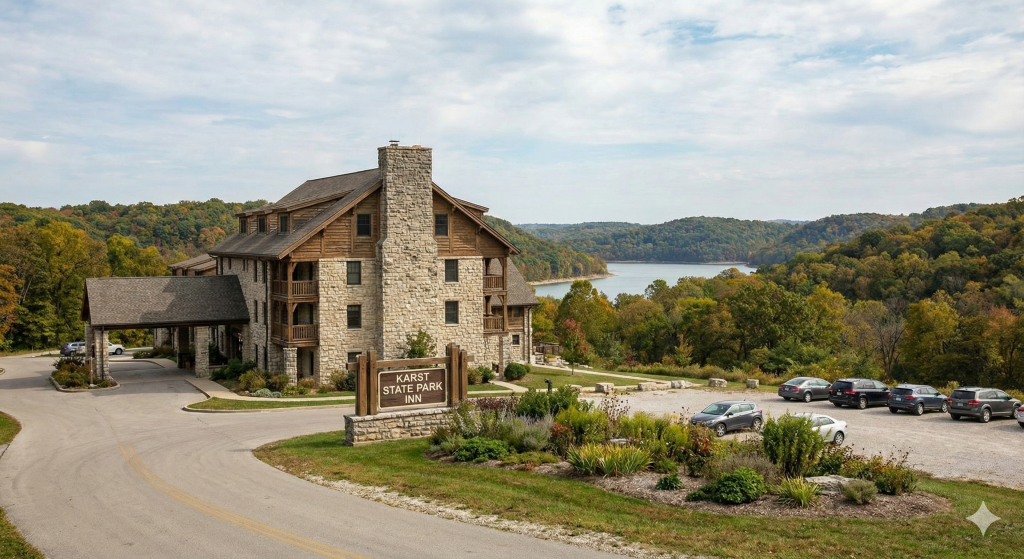
The park provides access to Karst Reservoir, a broad, cold body of water framed by forested shoreline. Locals fish its edges, launch small boats at first light, and watch fog settle across the surface in the early morning hours. Depending on the season, the reservoir feels either expansive and open or heavy and closed in, its mood changing with the weather.
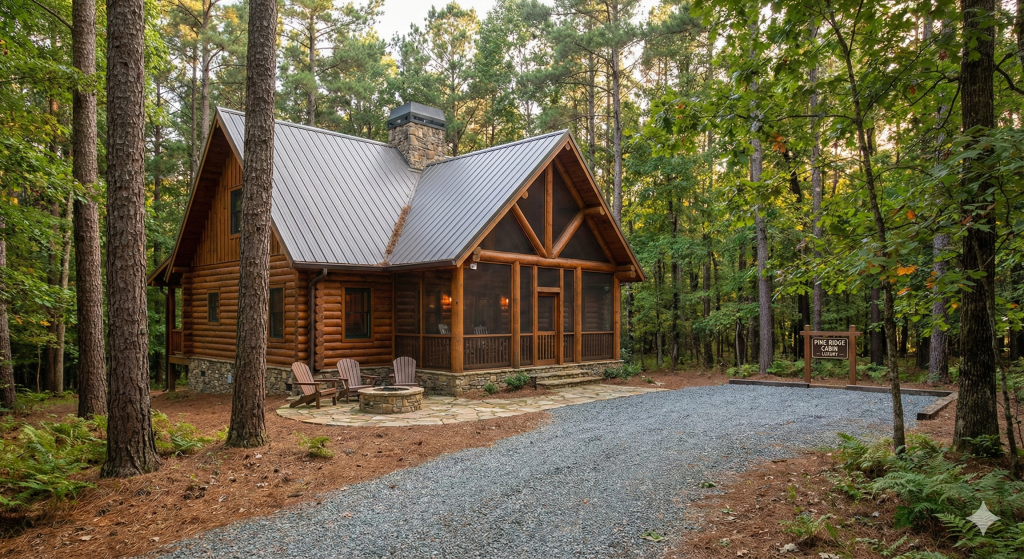
Near the main entrance sits the park inn, a modest structure designed to serve families, travelers, and seasonal visitors. Scattered deeper into the property are a number of family cabins, spaced far enough apart to offer privacy without isolation. Three luxury cabins sit farther back, tucked against tree lines and elevation changes, designed for longer stays and quiet retreat. From the road, they are easy to miss.
Karst State Park is a place people visit to unplug, to hike, to camp, or simply to be alone without truly leaving civilization behind. It is familiar, accessible, and heavily used, yet large enough that entire sections remain quiet even on busy weekends. The land feels settled, but never entirely predictable.
St. Mark’s Church
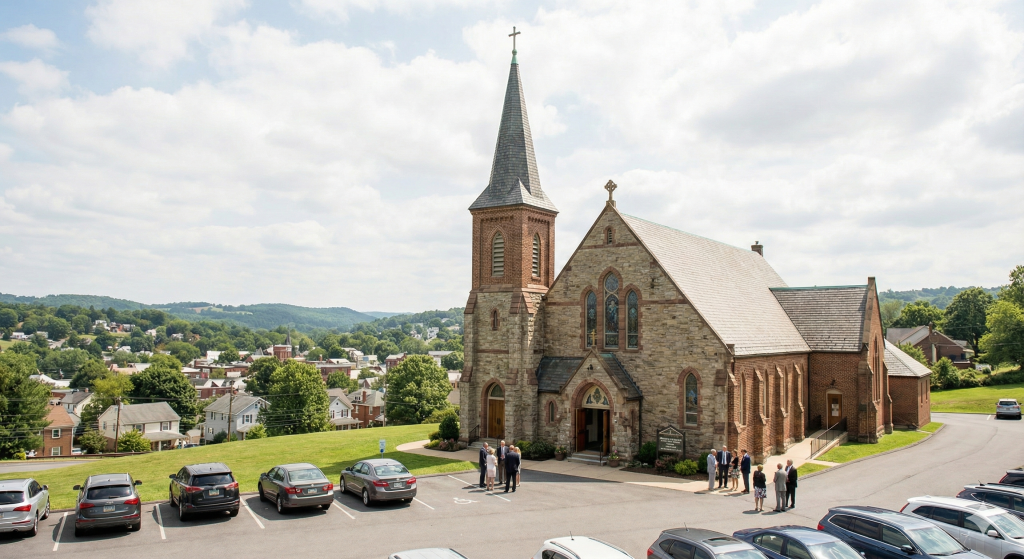
St. Mark’s Church sits on a modest rise at the edge of town, its steeple visible from several nearby roads. The building is traditional, neither ornate nor stripped down, and has served the community for decades. Sunday services draw a predictable mix of longtime members, young families, and visitors passing through.
The church hosts more than worship. Meetings, meals, youth programs, and volunteer efforts fill its weekly calendar. Conversations linger in the parking lot long after services end, and familiar routines anchor the week for many who attend.
For most congregants, St. Mark’s represents continuity. A place where schedules remain steady, rituals repeat, and the outside world feels held at a distance, if only briefly.
Limestone Ridge Quarry
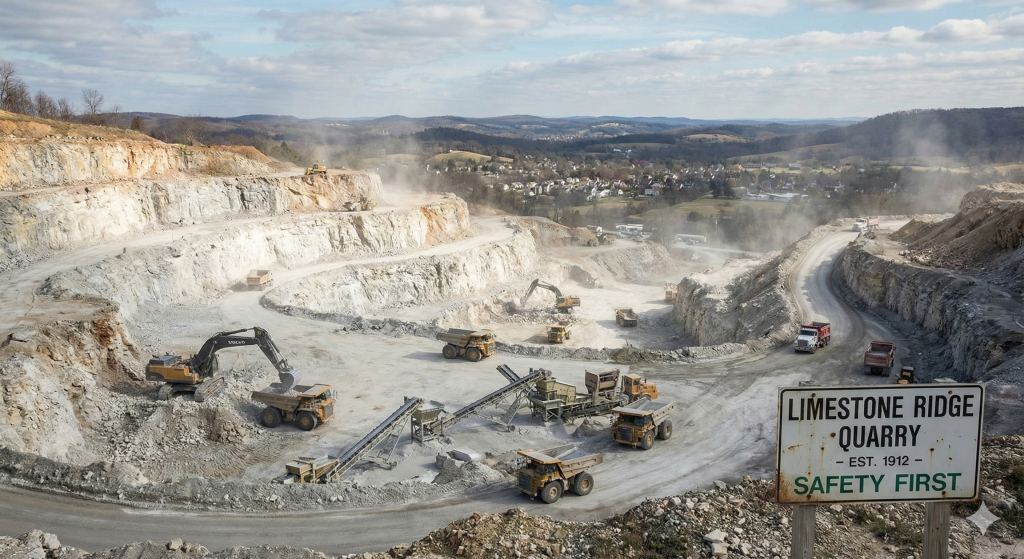
Limestone Ridge Quarry operates just beyond the outskirts of Karst Valley, tucked into the rolling terrain where exposed stone meets heavy equipment. The quarry has been active in some form for generations, its output shaping roads, buildings, and infrastructure throughout the region.
The site runs on strict schedules and tighter safety rules than outsiders might expect. Blasting is planned well in advance. Truck traffic follows established routes. The work is loud, physical, and methodical, producing a constant background presence that most residents barely register anymore.
To those who work there, the quarry is simply a job. To the Valley itself, it is part of the land’s long standing relationship with limestone and industry.
Chapel Hill Fellowship Church
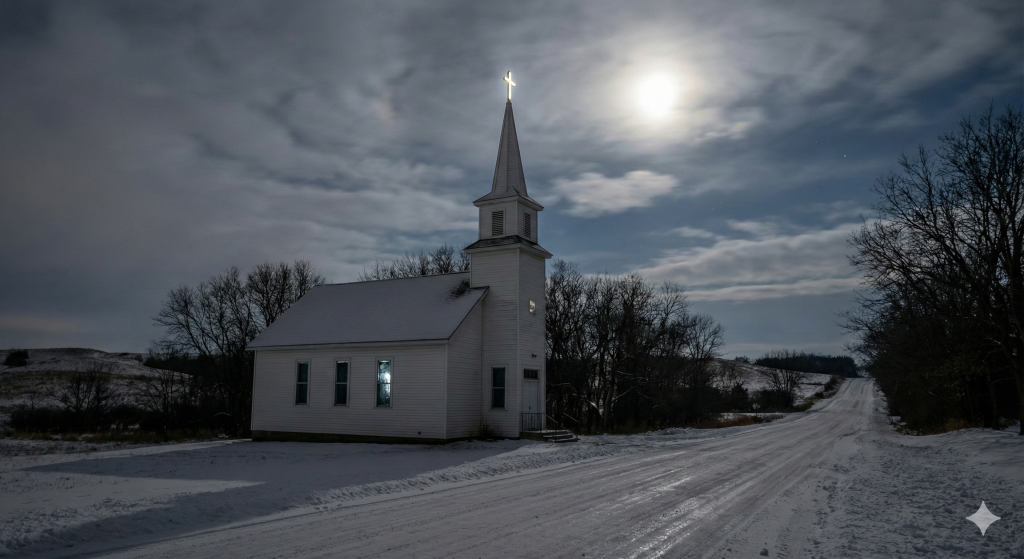
Chapel Hill Fellowship sits along a narrow stretch of road just outside Karst Valley, its white clapboard siding standing out against the surrounding trees and low hills. The building is modest in size, built more for function than grandeur, with a tall steeple that rises above the treeline and can be seen from a distance at night.
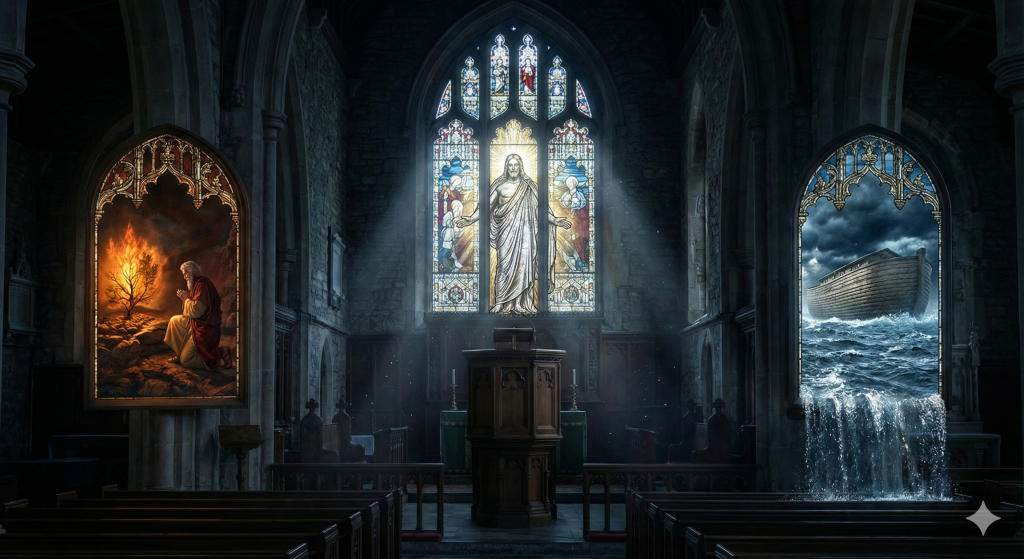
The church has served the surrounding community for decades, hosting weekly services, small group meetings, and seasonal gatherings. Inside, the sanctuary is simple and traditional. Wooden pews line a central aisle, leading toward a raised pulpit and altar area. Natural light filters in through tall windows along the sides, illuminating the space during the day and casting long shadows at night. Its defining feature is the stained glass windows, considered some of the most beautiful in the state.
Behind the sanctuary, the church includes storage rooms and utility spaces filled with hymnals, Bibles, folding tables, and aging office equipment. A small foyer connects the main entrance to the sanctuary, its windows overlooking the road and parking area. From there, a narrow stairwell descends to a lower level.
The basement serves as a practical extension of the church rather than a formal gathering space. It includes a few finished rooms used for meetings, storage, and temporary accommodations, along with basic amenities. The space was never designed for comfort, but it offers shelter, privacy, and separation from the outside world.
Chapel Hill Fellowship is quiet, unassuming, and easy to overlook during the day. At night, when the surrounding area falls dark, the steeple and cross catch whatever light remains, standing as a fixed point in otherwise uncertain ground.